
Case Story — Max’s Journey: Perineal Hernia Repair

Updated: Apr 9

Max, a 10-year-old intact Boston Terrier, came to our clinic after his owner noticed he had been straining to defecate and showing discomfort for several weeks. The owner also mentioned a swelling that seemed to be growing around Max’s right hind end. Despite his cheerful personality, Max was clearly uncomfortable every time he tried to pass stool.
During the physical exam, a soft, reducible bulge was felt just beside his anus. On digital rectal examination, it became clear that Max had lost the normal muscular support on the right side of his pelvic diaphragm — a classic sign of a right-sided perineal hernia.

To understand what was happening inside, we took abdominal and pelvic radiographs. The images confirmed mild displacement of the prostate and rectum, consistent with our suspicion. Interestingly, the X-rays also revealed that Max had urinary bladder stones. We discussed this finding with his owner and recommended a referral to a specialist for both conditions. However, because of financial limitations, the owner chose to proceed with the hernia repair at our hospital first and postpone the bladder stone surgery until later.
Before surgery, we performed routine pre-anesthetic blood work, which thankfully came back within normal limits. Max was otherwise healthy and ready to undergo anesthesia.
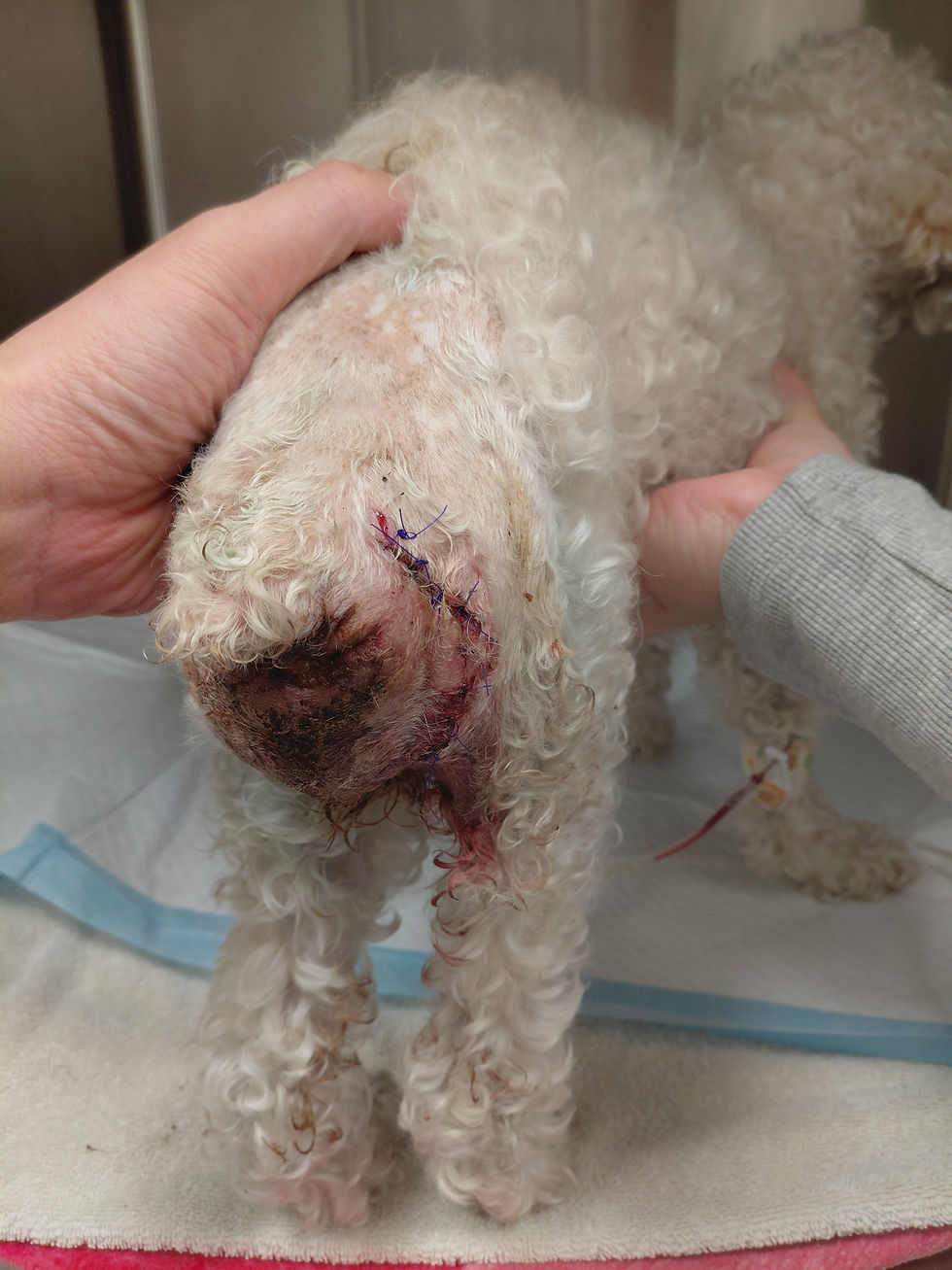
On the day of surgery, Max was anesthetized and carefully positioned for the procedure. Using an obturator muscle flap transposition technique, we reconstructed the damaged pelvic diaphragm. The obturator muscle was gently freed from its attachment on the ischium and rotated dorsally to fill in the hernia defect. It was then sutured securely to the external anal sphincter and coccygeus muscle to provide solid, long-term support. To further reduce the risk of recurrence, Max was also castrated during the same anesthetic period.
The surgery went smoothly, and Max recovered from anesthesia without any complications. He spent the night in our hospital for observation and pain control. Post-operatively, we started him on antibiotics, pain medication, and stool softeners to make his bowel movements easier. He went home the next day with an Elizabethan collar and strict instructions for rest and limited activity.
At his three-week recheck, Max walked into the clinic with his tail wagging and his owner smiling. The incision was completely healed, and there was no swelling or straining. His bowel movements were normal, and he seemed comfortable and happy again.
For now, Max is enjoying his daily walks and meals without difficulty. The plan is to address his bladder stones at a later date, but his hernia repair has been a great success.
Any link related to perineal hernia.


Comments